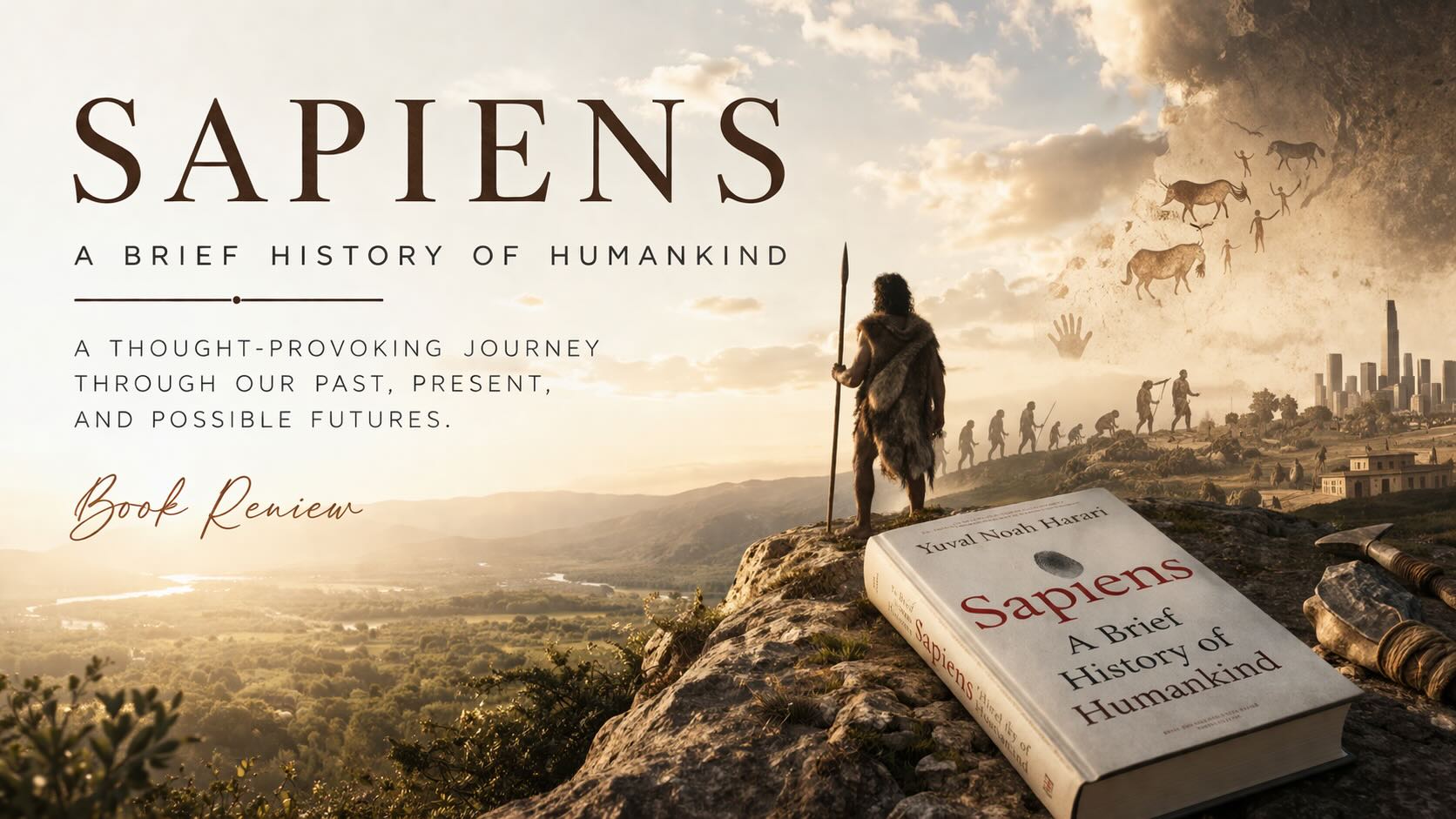
I read Sapiens and I still don't know what to think, and maybe that's the point

You know that feeling when a book makes you question things you've always just… accepted? That's exactly what Sapiens did to me. And honestly, I'm still not sure what to do with that.
This isn't a history book in the way I expected. It's more like someone pulling back a curtain and going, "Hey, are you sure you actually understand how we got here?" And the uncomfortable answer, for me at least, is: not really.
What surprised me most is how Harari never pretends to be neutral. His perspective is clear, sometimes a little provocative, and that's actually what keeps you engaged. You're not just absorbing facts, you're reacting to them. Nodding along, then pausing. Going, "Wait… is that actually true?"
One of the ideas that stuck with me: we weren't always the only humans around. Neanderthals, Denisovans, others, all sharing the planet. So why us? Why did we make it and they didn't?
That question lingers in a way that feels almost eerie. It reframes humanity from something inevitable to something kind of… accidental. And I haven't fully shaken that.
The section on hunter-gatherer life hit differently than I expected too. Harari paints a picture of people moving with their bodies, attuned to their environment, constantly adapting. No desks, no routines, no screens. And instead of sounding primitive, it honestly sounds… intentional? Balanced, even.
Which then makes you think: what exactly did we gain from "progress," and what did we quietly trade away to get it? That question comes up a lot in the book, and it doesn't give you a clean answer. Which is both frustrating and kind of the whole point.
I'll be honest: I finished it a little unsettled. Not in a bad way, more like the feeling after a conversation that goes somewhere unexpected. I'm still turning some of it over in my head.
If you want a book that just tells you what happened, this probably isn't it. But if you're okay with a book that makes you sit with some uncomfortable "but why, though?" energy for a while, this one's worth it.